

The G-7 Meeting and the next global economic crisis
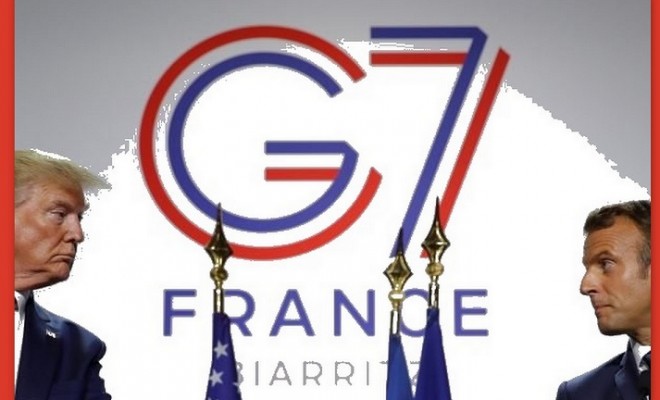
If G-7 meetings were supposed to be occasions on which leaders of the world’s major economies built trust, last weekend’s G-7 meeting in Biarritz was not one of them. This does not bode well for international economic policy cooperation in resolving the next global economic recession.
It was not just that the United States and the remaining six G-7 members could not issue a joint statement indicating unanimous support for keeping global markets open and for refraining from manipulating their currencies. More importantly, actions taken by both President Trump and President Macron are bound to have further soured US-European relations and undermined trust in US economic leadership.
Among the more serious of these actions was President Trump’s choice of the eve of the G-7 meeting to ramp up the US-China trade war. Also not helpful was President Trump’s encouragement to Boris Johnson to opt for a hard-Brexit on October 31 and his insistence that Russia should be included as a full participant at the following G-7 meetings despite its annexation of Crimea.
These actions on Brexit and Russia will reinforce the European view that President Trump is set upon causing the European project to fail.
For his part, French President Macron could not have endeared himself to President Trump by springing on the meeting a surprise visit by the Iranian foreign minister. That is bound to be interpreted by President Trump as an effort to isolate and embarrass the United States.
This is all highly regrettable since there is every indication that we will soon need US leadership and economic policy cooperation to resolve the next global economic crisis.
This would especially seem to be the case at a time that the US-Chinese trade war shows no signs of abating while the difficult political situation in Hong Kong could put a US-Chinese trade agreement out of reach. It would also seem to be the case at a time that the United Kingdom could be veering towards a hard Brexit on October 31, that highly indebted Italy could be having a disruptive election before year-end, and that both the Argentine and Turkish economic crises show every sign of deepening.
Desmond Lachman joined AEI after serving as a managing director and chief emerging market economic strategist at Salomon Smith Barney. He previously served as deputy director in the International Monetary Fund’s (IMF) Policy Development and Review Department and was active in staff formulation of IMF policies. Mr. Lachman has written extensively on the global economic crisis, the U.S. housing market bust, the U.S. dollar, and the strains in the euro area. At AEI, Mr. Lachman is focused on the global macroeconomy, global currency issues, and the multilateral lending agencies.


